Gift Sets
 Fragrances
 Whip Lush
 BYOB Sale

 Eye Like Options
 Glow Getter
 Dart Its
 Stacked In Your Favour
 Bundles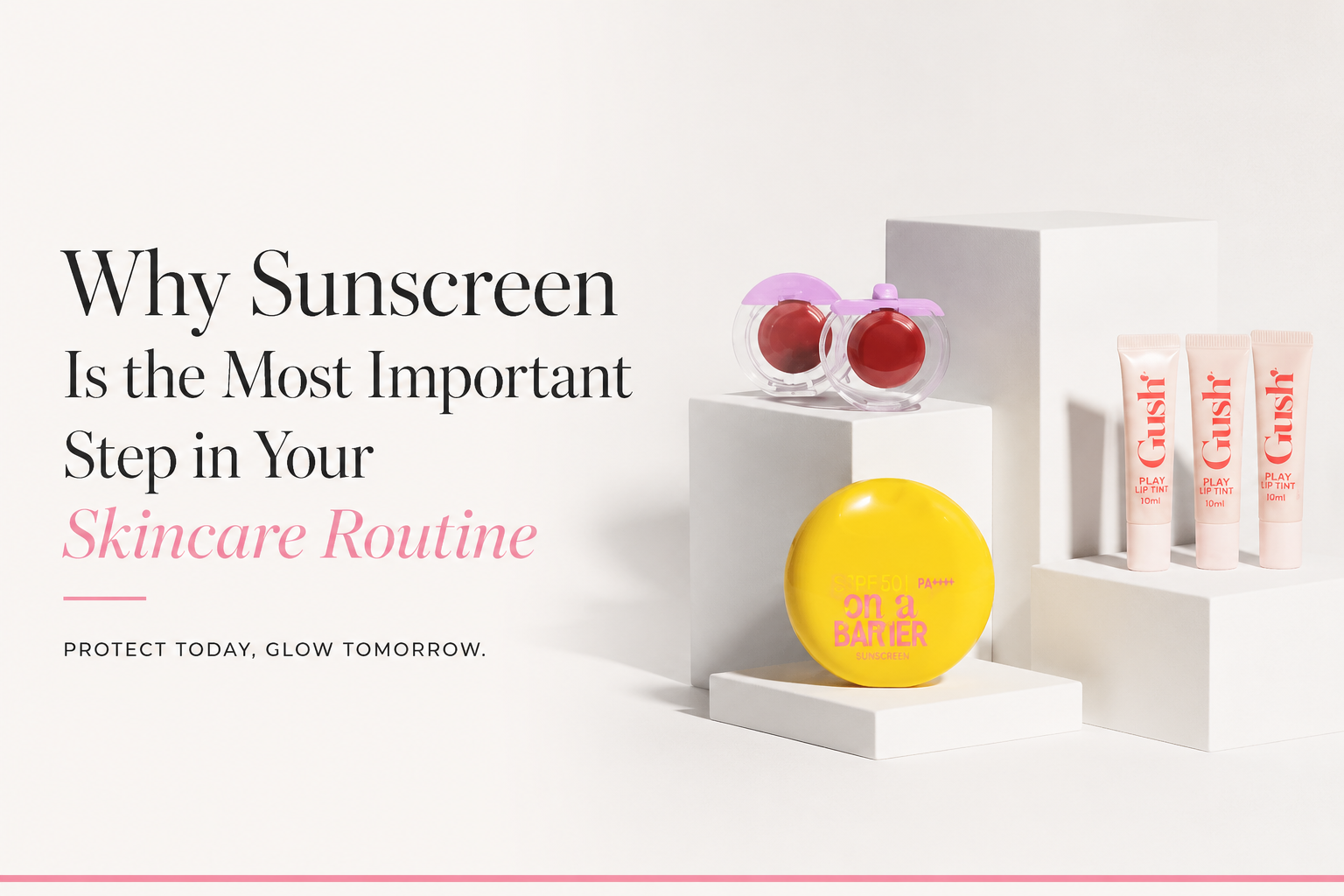
Why Sunscreen Is the Most Important Step in Your Skincare Routine
Every skincare routine has steps. Cleanser, toner, serum, moisturiser, and more.
Most of them are useful. Some are essential. One of them is non-negotiable.
Sunscreen is the single most important step in any skincare routine. Not because of marketing. Not because a brand wants to sell it to you. Because of what UV radiation does to skin over time, and because nothing else in your routine can compensate for skipping it.
This guide explains why sunscreen outranks every other skincare step, what happens to skin without it, how it works alongside your other products, and which options from Gush Beauty make the habit as easy as possible to follow through on every single morning.
What UV Radiation Does to Skin Over Time
Your skin receives UV radiation from the sun every single day. Even on cloudy days. Even through windows. Even during a short commute.
Two types of UV rays affect your skin continuously.
UVB rays cause sunburn. They damage the surface of the skin and are strongest during midday hours. They are partially blocked by glass.
UVA rays penetrate much deeper. They reach the dermis, the layer of skin where collagen and elastin live. UVA rays break down collagen over time. They trigger excess melanin production. They are responsible for the visible signs of ageing, including fine lines, loss of firmness, and uneven skin tone. Critically, UVA rays are present throughout the entire day, penetrate clouds, and pass through glass. You receive UVA exposure sitting near a window at home or work even when the day looks grey.
The damage from UV radiation is cumulative. It adds up over years. Skin repairs itself to an extent when you are younger, which is why the damage is not immediately obvious. But it accumulates silently and becomes visible over time as pigmentation, texture changes, and premature ageing.
For Indian skin specifically, UV exposure is one of the primary causes of post-inflammatory hyperpigmentation. The dark marks that linger after a pimple heals are significantly worsened by UV exposure. Melanin-rich skin responds to UV-triggered inflammation by producing more pigment, making consistent daily sun protection particularly important for preventing and managing pigmentation concerns common in Indian skin tones.
Why does UV damage not show up immediately?
Skin has repair mechanisms that compensate for acute UV damage in younger skin. The effects of daily cumulative exposure build in the deeper layers before becoming visible on the surface. By the time visible pigmentation, fine lines, or texture changes appear, years of accumulated damage have led to them. This delayed visibility is one of the main reasons people underestimate the importance of daily SPF. The protection you apply in your twenties determines how your skin looks in your thirties and forties.
Why Sunscreen Ranks Above Every Other Skincare Product
Skincare products work by improving skin health from within. Serums deliver actives. Moisturisers replenish hydration. Cleansers remove impurities. These are all genuinely useful.
But they all work on skin that UV exposure is damaging every day without protection.
A vitamin C serum brightens existing pigmentation. UV exposure creates new pigmentation daily. Without sunscreen, the serum is addressing a problem that is being continuously recreated faster than any active can resolve it.
A retinol serum stimulates collagen production and accelerates cell turnover. UV exposure breaks down collagen continuously. Without sunscreen, the retinol is working against a process it cannot outpace.
A niacinamide serum regulates oil production and reduces the appearance of pores. UV exposure contributes to skin inflammation that worsens congestion. Without sunscreen, the niacinamide is addressing effects while the cause continues.
Sunscreen addresses the cause. Everything else in your routine addresses the effects.
This is why dermatologists consistently place SPF above every other skincare product recommendation. Not because other products are not useful. Because without SPF, those products are working at a significant disadvantage.
Does expensive skincare work if I do not use sunscreen?
Less effectively than it would with sunscreen. Active ingredients like retinol and vitamin C can deliver results on skin that receives daily UV exposure, but those results take longer, require more consistency, and deliver less visible change than they would on protected skin. The investment in those products is better protected when sunscreen is used consistently underneath.
Sunscreen Is Year-Round, Not Seasonal
Most people think of sunscreen as a summer or outdoor product. This misunderstanding is one of the most significant gaps in daily SPF use.
UV index levels in Indian cities including Mumbai, Delhi, Bengaluru, Chennai, and Hyderabad remain meaningfully high for most of the year. During monsoon months, cloud cover reduces the visible sun but UVA radiation reaches the skin with minimal reduction. Cold weather does not reduce UV radiation. An overcast sky does not eliminate UV exposure.
The damage from UV radiation accumulates across all seasons and all weather conditions. A year of daily sun protection delivers meaningfully better long-term skin outcomes than six months of seasonal use.
Building the habit of applying sunscreen every morning regardless of weather, season, or whether you plan to be outdoors is the most effective way to ensure consistent protection.
What happens if I skip sunscreen for a few days?
A few days of missed sunscreen does not cause dramatic visible change, which is part of why the habit is easy to drop. But UV damage accumulates incrementally. Each unprotected day adds a small amount to a total that compounds over months and years. The effect of inconsistent SPF use becomes visible over time in the form of earlier and more pronounced pigmentation, texture changes, and ageing compared to skin that received consistent daily protection.
How Sunscreen Works and What to Look For
Sunscreen works by either absorbing UV rays before they reach the skin or by reflecting them away.
Chemical sunscreens absorb UV rays and convert them to heat that is released from the skin. They tend to be lightweight, absorb quickly, and are easy to layer under makeup. They are the most common format in daily-wear sunscreens.
Mineral sunscreens use zinc oxide or titanium dioxide to sit on top of the skin and reflect UV rays. They are gentler for sensitive and reactive skin. Newer formulations have addressed the historical white cast issue, particularly in tinted formats.
Regardless of the type, two things must appear on any sunscreen worth using.
Broad spectrum means the sunscreen protects against both UVA and UVB rays. A sunscreen without this label only addresses UVB and leaves UVA damage unaddressed. It is non-negotiable.
SPF 30 is the minimum for everyday indoor use. SPF 50 is the better choice for outdoor time, high UV index days, or anyone managing pigmentation concerns on Indian skin.
The PA rating system, common on Asian formulations, indicates UVA protection specifically. PA+++ or PA++++ is what to look for in a daily sunscreen for Indian conditions.
The UV U Later SPF 50 Sunscreen Serum from Gush Beauty meets all of these criteria. SPF 50, PA+++ broad spectrum, in a serum texture that absorbs within about a minute, leaves no white cast on any Indian skin tone, and sits comfortably under all makeup formats. It is from the Skin Play collection and is designed specifically for daily use in Indian skin and climate conditions.
Where Sunscreen Fits in Your Routine
Sunscreen goes last in your morning skincare routine. Always.
The order is cleanser, then toner if you use one, then serum, then moisturiser, then sunscreen as the final skincare step. Makeup goes on after.
Sunscreen needs to form a protective layer on the outermost surface of the skin to work effectively. Applying other products on top of it after application reduces its contact with the skin surface and compromises efficacy. Mixing it into your moisturiser or foundation dilutes the formula and reduces the effective SPF you receive.
Two additional combinations worth knowing.
Vitamin C serum and sunscreen are complementary and should both be used. Vitamin C is an antioxidant that neutralises free radicals generated by UV exposure. SPF blocks the UV rays. Using both together gives more complete protection against UV-related skin damage than either product provides alone. Apply vitamin C in your serum step, let it absorb, then apply sunscreen on top.
Retinol and sunscreen work together rather than against each other. Retinol increases photosensitivity, which means skin that uses retinol is more vulnerable to UV damage than skin that does not. This makes daily sunscreen even more important for anyone using retinol in their evening routine.
How to Apply Sunscreen Correctly
Most people apply significantly less sunscreen than is needed for the SPF on the label to be accurate.
The recommended amount for the face and neck is approximately a quarter teaspoon or 1.5ml. This is more than most people apply in a single go. The two-finger rule is a practical reference: squeeze sunscreen along the full length of your index and middle fingers together. That is roughly the right amount.
Apply evenly across the full face, including the forehead, nose, cheeks, chin, and jaw. Extend to the neck. Do not forget the ears or the backs of the hands, which receive consistent daily UV exposure.
For reapplication during the day, particularly for outdoor exposure, the Sunscreen Stick from Gush Beauty applies cleanly over makeup without tools and without disturbing your base. Keep it in your bag for midday reapplication without needing to redo your makeup.
Why the Right Formula Makes Consistency Possible
The most common reason people skip sunscreen consistently is finding a formula they do not enjoy using.
A sunscreen that leaves a white cast, feels heavy and greasy, pills under makeup, causes breakouts, or takes too long to absorb will be skipped on any morning when time is short or motivation is low. And a skipped sunscreen offers zero protection regardless of its SPF number.
Finding a formula that genuinely suits your skin type and fits naturally into your routine is the most important sunscreen decision you can make. The product that feels comfortable enough to use every single day, even on the most rushed mornings, is the one that will actually protect your skin.
For oily and combination skin, a serum or gel texture is ideal. It absorbs quickly without adding to surface oiliness.
For dry skin, applying the Glow Getter Illuminating Moisturiser first and then layering the UV U Later SPF 50 Sunscreen Serum on top gives a comfortable, non-drying base with full SPF protection.
For sensitive skin, patch testing any new sunscreen formula on the inner arm before full face application is a reliable precaution before committing to daily use.
For all skin tones on Indian skin, the UV U Later SPF 50 Sunscreen Serum absorbs completely without white cast, making it the most accessible daily-use format across the range of Indian complexions.
Frequently Asked Questions
Is sunscreen more important than moisturiser?
For long-term skin health, yes. Moisturiser improves comfort and supports the skin barrier. Sunscreen prevents the UV damage that is the primary external cause of premature ageing, pigmentation, and skin barrier compromise over time. If you had to choose one of the two, SPF delivers more long-term skin benefit. In practice, use both. The Glow Getter Illuminating Moisturiser and the UV U Later SPF 50 Sunscreen Serum together cover both steps in a two-minute application.
Does sunscreen prevent the results of other skincare products from working?
No. It enhances them. Active ingredients like retinol, vitamin C, and niacinamide all work more effectively on skin that is not receiving daily unprotected UV exposure. Sunscreen protects the work those products are doing rather than interfering with it. Applying SPF as the final skincare step does not prevent actives applied underneath from absorbing and working.
Why does my skin still tan even with SPF 50?
No sunscreen blocks 100 percent of UV rays. SPF 50 blocks approximately 98 percent of UVB rays. Some UV still reaches the skin, and tanning can still occur with prolonged outdoor exposure. The purpose of daily sunscreen is to dramatically reduce UV damage accumulation rather than to prevent all tanning absolutely. Consistent use significantly reduces the rate and depth of tanning and prevents the kind of UV damage that causes permanent pigmentation changes.
Can I use sunscreen on my body with the same formula as my face?
The UV U Later SPF 50 Sunscreen Serum is formulated for facial use and is lightweight enough for the face. Body sunscreens are usually thicker and more emollient, which suits the body skin's different needs and surface area. For body protection on outdoor days, a separate body sunscreen formula is practical. For daily face and neck use, the UV U Later is the dedicated option.
Is one sunscreen application in the morning enough for the whole day?
For a predominantly indoor day with minimal direct sun exposure, one morning application is generally sufficient. For outdoor activity, commuting in direct sun, or physical exercise outdoors, reapplication every two hours is recommended. The Sunscreen Stick makes midday reapplication over makeup practical for any situation.
Does skin type change which SPF level is best?
Skin type does not change the recommended SPF level. SPF 30 minimum for everyday use and SPF 50 for outdoor or high UV exposure is the recommendation across all skin types. What changes is the best formula texture for your skin type. Oily skin benefits from a lightweight serum or gel. Dry skin benefits from layering over a rich moisturiser. The UV U Later SPF 50 Sunscreen Serum works comfortably across all skin types in Indian conditions.
What is the single most important thing to know about sunscreen?
Apply enough of it. Most people apply 25 to 50 percent of the amount needed for the SPF on the label to be accurate. Applying the full recommended amount, a quarter teaspoon for the face and neck, makes the single biggest difference to the protection you actually receive from the product you are already using.
Final Thoughts
Sunscreen is not a luxury step or a seasonal product. It is the foundation that every other skincare investment rests on.
The serums, the actives, the treatments, and the moisturisers all perform better on skin that is consistently protected from daily UV exposure. Without sunscreen, you are working against a cause that your skincare cannot address.
Apply it every morning. Use the full recommended amount. Find a formula your skin actually likes so you use it consistently.
Explore the Skin Play collection at Gush Beauty for the UV U Later SPF 50 Sunscreen Serum and the Sunscreen Stick. For skincare combinations that work alongside your SPF, check the Bundles and Sets.

From Office to Party: Press-On Nail Styles for...
Oct 19, 2026

Press-On Nails for Small Nail Beds: How to...
Oct 16, 2026

Press-On Nails for Weddings: How to Choose a...
Oct 12, 2026

Almond vs Round vs Coffin Nails: How to...
Oct 09, 2026

How to Choose the Right Press-On Nail Size...
Oct 05, 2026

Answers to the Most Confusing Beginner Beauty Questions
Sep 28, 2026

The Best Gush Beauty Products for a Minimal...
Sep 25, 2026

Beauty Trends That Look Great On Camera and...
Sep 21, 2026

Beauty Hacks That Make Your Makeup Last from...
Sep 18, 2026

Cruelty-Free Beauty vs Vegan Beauty: What Is the...
Sep 14, 2026