Gift Sets
 Fragrances
 Whip Lush
 BYOB Sale

 Eye Like Options
 Glow Getter
 Dart Its
 Stacked In Your Favour
 Bundles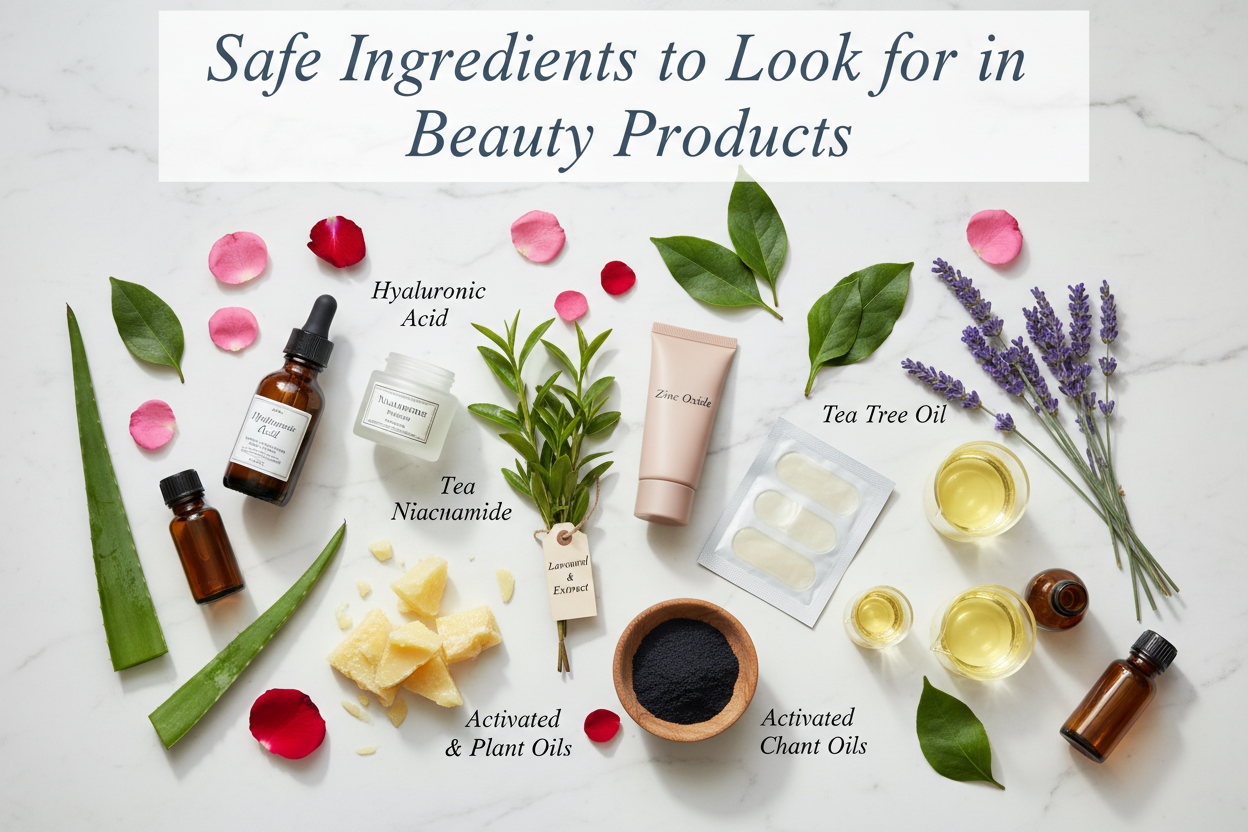
Safe Ingredients to Look for in Beauty Products
Reading a beauty ingredient list can feel like reading a foreign language. Long chemical names, unfamiliar terms, and a list that sometimes runs to forty ingredients or more. It is easy to give up and just go with whatever smells good or looks nice.
But what is in a product matters. Some ingredients do exactly what they promise. Others are mostly filler. And some can irritate or sensitize skin over time, especially with daily use.
This guide cuts through the noise. Here are the safest, most effective ingredients to look for in your skincare and makeup, explained simply, with real context for how each one works.
Hyaluronic Acid
Hydration
What it is: A naturally occurring molecule in the body that holds water. It can hold up to 1000 times its own weight in moisture.
What it does: Draws moisture from the air and from deeper skin layers to the surface. It plumps skin, reduces the appearance of fine lines, and gives a smooth, hydrated finish.
Who it is for: Every skin type. It is one of the most universally tolerated ingredients in skincare. Even oily and acne-prone skin types benefit because hyaluronic acid is non-comedogenic and does not trigger breakouts.
What to look for on the label: Hyaluronic acid, sodium hyaluronate, or hyaluronan.
Is hyaluronic acid safe for daily use?
Yes. Hyaluronic acid is one of the safest daily skincare ingredients available. It does not irritate, does not cause breakouts, and works for all skin types including sensitive and reactive skin. It is water-based so it is light enough to use morning and night without feeling heavy. The only thing to know is that it works best when applied to slightly damp skin. If applied to very dry skin in a dry environment, it can pull moisture from deeper in the skin rather than the air, which may slightly increase dryness in low-humidity conditions.
Niacinamide
Multi-Tasker
What it is: A form of vitamin B3 that is water-soluble and well-studied in skin care.
What it does: Reduces the appearance of pores. Fades hyperpigmentation and dark spots. Strengthens the skin barrier. Controls excess oil production. Reduces redness and inflammation. It is one of the most researched multi-benefit ingredients in modern skincare.
Who it is for: Almost everyone. Especially useful for oily and combination skin, skin with hyperpigmentation, and anyone dealing with uneven skin tone from old acne marks. Also gentle enough for sensitive skin types at lower concentrations.
What to look for on the label: Niacinamide or nicotinamide.
What does niacinamide do for skin?
Niacinamide is one of the most versatile skincare ingredients because it addresses multiple concerns at once. It regulates sebum production, which helps with oily skin. It inhibits the transfer of melanin to the skin surface, which reduces dark spots and hyperpigmentation over time. It reinforces the skin's moisture barrier, which keeps skin more resilient against irritants. And it has anti-inflammatory properties that calm redness and reduce the appearance of enlarged pores. It is particularly useful for Indian skin tones, which are more prone to post-inflammatory hyperpigmentation from acne and sun exposure.
Zinc Oxide
Sun Protection
What it is: A mineral UV filter that sits on top of the skin and physically reflects UV rays rather than absorbing them chemically.
What it does: Protects against both UVA and UVB rays. It is broad-spectrum by nature. It also has mild anti-inflammatory and antimicrobial properties, making it gentle on reactive and acne-prone skin.
Who it is for: Everyone, but especially those with sensitive skin, reactive skin, or skin that does not tolerate chemical UV filters well. It is also one of the most recommended sunscreen actives for acne-prone skin because it does not clog pores.
What to look for on the label: Zinc oxide. Sometimes listed as ZnO.
For daily SPF protection, the UV U Later SPF 50 Sunscreen Serum is a hybrid broad-spectrum formula with SPF 50 PA+++ protection. For on-the-go reapplication, the Sunscreen Stick gives you easy, portable protection throughout the day. Both are from the Skin Care collection at Gush Beauty.
What is the difference between mineral and chemical sunscreen?
Mineral sunscreens use physical filters like zinc oxide or titanium dioxide that sit on top of the skin and reflect UV rays away. Chemical sunscreens use ingredients that absorb UV rays and convert them to heat, which is then released from the skin. Mineral sunscreens are generally better tolerated by sensitive and reactive skin. Chemical sunscreens tend to be more sheer and invisible on the skin. Hybrid sunscreens combine both types to get the benefits of each. The most important thing is that you use whichever one you will actually wear every day.
Hydrocolloid
Blemish Treatment
What it is: A gel-forming material originally developed for wound care. It creates a moist, sealed environment that supports healing.
What it does: When applied over a pimple, it draws out impurities through osmosis, reduces inflammation, and creates a barrier that prevents touching and bacteria transfer. It visibly reduces pimple size and redness overnight in most cases.
Who it is for: Anyone with surface-level blemishes or whiteheads. It works best on pimples that have come to the surface. It is safe for all skin types including sensitive skin because it does not contain any actives that cause irritation.
What to look for on the label: Hydrocolloid or CMC (carboxymethylcellulose).
The Dart It Hydrocolloid Pimple Patches deliver this ingredient in the most direct format: a thin patch applied straight to the blemish. No spreading, no guesswork, no irritation to surrounding skin. The Dart It Mini Tea Tree Patches add tea tree extract for its antimicrobial benefit alongside the hydrocolloid action. Both are from the Skin Care collection. The Dart It Set of 5 is available in the Bundles section.
Tea Tree Oil
Antimicrobial
What it is: An essential oil extracted from the leaves of the Melaleuca alternifolia tree. It has documented antimicrobial and anti-inflammatory properties.
What it does: Kills acne-causing bacteria on the skin surface. Reduces redness and inflammation around blemishes. Can help prevent new breakouts when used consistently in a well-formulated product.
Who it is for: Oily and acne-prone skin types. It should always be used diluted in a formula, never applied directly to the skin as pure essential oil, as this can cause burns and irritation.
What to look for on the label: Tea tree oil or Melaleuca alternifolia leaf oil.
Is tea tree oil good for pimples?
Yes, when used in a properly diluted formulation. Research supports tea tree oil as an effective ingredient for reducing acne due to its antibacterial action against Cutibacterium acnes, the bacterium associated with acne. It is slower-acting than benzoyl peroxide but significantly less irritating. The key is using it in a product where the concentration is already controlled rather than applying the undiluted oil directly, which can cause skin burns and sensitization.
Lavender Extract
Calming
What it is: An extract from the lavender plant, used in skincare for its soothing, anti-inflammatory, and mild antimicrobial properties.
What it does: Calms redness and irritation. Has a mild antiseptic effect that helps keep pores clear. Also has a pleasant natural scent that comes from the plant's own compounds rather than synthetic fragrance.
Who it is for: Most skin types, including sensitive skin. Some people with very reactive or allergy-prone skin may still react to botanical extracts, so a patch test is always wise with any new product.
What to look for on the label: Lavandula angustifolia extract or lavender water.
The Lavender Nose Strips use lavender extract alongside the adhesive action of the strip to clear pore buildup while being gentler on the surrounding skin. A good choice for sensitive nose skin or for anyone who finds standard charcoal strips too intense. From the Skin Care collection.
Activated Charcoal
Deep Cleansing
What it is: Carbon that has been processed to increase its surface area, making it highly porous and able to attract and bind to impurities.
What it does: Draws out oil, dirt, and debris from pores. Works well in nose strips and face masks where it has time to adsorb buildup before being removed. Gives a visibly clear pore after use.
Who it is for: Oily and combination skin types with visible pore congestion. Those with dry or sensitive skin should use it less frequently as it can also draw out beneficial oils if overused.
What to look for on the label: Activated charcoal or carbon powder.
The Charcoal Nose Strips combine activated charcoal with the adhesive action of a pore strip for a deep, visible clean on the nose area. Use once or twice a week depending on how oily your skin is. From the Skin Care collection at Gush Beauty.
How does activated charcoal remove blackheads?
Activated charcoal works through a process called adsorption, where impurities adhere to the surface of the charcoal particles due to their opposite charges. When activated charcoal is applied to the skin in a strip or mask format, it draws oil, dead skin cells, and debris to the surface as the product dries. When the strip is removed, it pulls the charcoal and the bound impurities away from the pore together. The result is visibly cleaner pores. It is most effective for surface-level blackheads and sebaceous filaments rather than deep cystic congestion.
Natural Waxes and Plant Oils
Moisturizing and Sealing
What they are: A category of ingredients including jojoba oil, shea butter, carnauba wax, and similar plant-derived fats and waxes.
What they do: Create a protective layer on the skin surface that seals in moisture and prevents water loss. Plant oils that have a molecular structure similar to the skin's natural sebum, such as jojoba, absorb without feeling greasy and can actually help balance sebum production. Waxes give texture and structure to products like balms and lip products.
Who they are for: Most skin types. Lightweight oils like jojoba and squalane work for oily skin too. Heavier waxes and butters are better for dry skin or for products like lip balms where a rich, protective finish is the goal.
Plant-based waxes and oils are what give the Butter Balm Hybrid Gloss Balm its conditioning, protective feel on the lips. The Juicy Lip Oil similarly uses plant oils to nourish lips while delivering colour. The Clean Slate Cleansing Balm relies on an oil base to dissolve other oils on the skin surface during cleansing. All are from the Skincare-Infused Makeup range and the Skin Care collection.
Are plant oils safe for acne-prone skin?
Some are, some are not. The key is the comedogenic rating of the oil, which is a scale that measures how likely an oil is to clog pores. Oils with a low comedogenic rating, such as jojoba, squalane, rosehip, and hemp seed, are generally safe for acne-prone skin and are used in many non-comedogenic formulas. Oils with a higher rating, like coconut oil or cocoa butter, are more likely to cause breakouts when applied to the face. Always check the comedogenic rating of an oil before applying it directly to acne-prone skin.
Serum-Based Delivery Systems in Makeup
Skincare in Makeup
This is not a single ingredient. It is a formulation approach. Serum-based delivery means that the base of a makeup product, like blush or lip colour, is made using the same kind of lightweight, skin-penetrating carrier used in skincare serums. This allows the product to sink into the skin rather than sit on top of it.
The result is makeup that behaves more like skincare. It blends more naturally, lasts longer, and delivers some skin benefit alongside the colour or coverage.
This is the core idea behind Gush Beauty's entire product philosophy. The Squishy Serum-Infused Liquid Blush uses a serum base to deliver colour and hydration simultaneously. The Glow Getter Illuminating Moisturiser is both skincare and makeup base in one product. The UV U Later SPF 50 Sunscreen Serum delivers sun protection in a serum format that absorbs fully rather than sitting on the surface. Explore the full Skincare-Infused Makeup collection for more products built on this approach.
What does skincare-infused makeup mean?
Skincare-infused makeup means cosmetic products that contain active skincare ingredients in their formula so that wearing the makeup also delivers some benefit to the skin. This might mean a blush that contains hyaluronic acid, a lip colour that contains vitamin E, or a sunscreen that doubles as a makeup base. The goal is to reduce the number of steps in a routine without reducing the overall benefit your skin receives. For people with busy schedules or those who want a simplified routine, this approach offers real practical value.
Ingredients to Be Aware of and Why
Know Before You Buy
This is not a list of banned or dangerous ingredients. It is a list of ingredients that are worth knowing about before choosing products for daily use, especially for sensitive skin.
Synthetic fragrance, often listed as parfum or fragrance, is the most common cause of skin reactions in beauty products. It is an umbrella term that can cover hundreds of individual chemicals. Fragrance-free products are always the safer choice for reactive skin.
Alcohol denat, also known as denatured alcohol or SD alcohol, is used in many toners and some makeup primers to create a lightweight, quick-dry finish. In high concentrations with daily use, it can disrupt the skin's moisture barrier over time. A small amount in a formula is usually fine. It becomes problematic when it is one of the first few ingredients listed.
Parabens are preservatives found in many cosmetics. They are effective at preventing contamination and have been used for decades. However, ongoing consumer concern and precautionary use have led many brands to reformulate without them. If you prefer paraben-free products, check for methylparaben, propylparaben, or butylparaben on the label.
Sulfates, mainly sodium lauryl sulfate and sodium laureth sulfate, are cleaning agents that create foam. They are generally safe but can be drying and irritating with daily use, particularly for dry and sensitive skin types. Many gentle cleansers now use milder alternatives.
A practical shortcut for reading labels: ingredients are listed in descending order of concentration. The first five ingredients make up the bulk of the product. If something you want to avoid appears in the first five, it is present in a meaningful amount. If it appears near the bottom of a very long list, the concentration is low and likely not significant.
How do I know if a beauty product is safe?
Check the ingredient list for the main actives in the first five ingredients and compare them to what the product claims to do. If a product claims to be hydrating but the first ingredients are alcohol and fragrance, that is a mismatch worth noting. Look for transparent brands that list all ingredients clearly and explain what they do. Do a patch test with any new product by applying a small amount to the inside of your wrist or behind your ear and waiting 24 hours before applying it to your face. Certifications from recognized bodies, like cruelty-free marks or dermatologist-tested claims, add some additional reassurance but should not replace reading the label yourself.
Final Thoughts
Safe beauty starts with knowing what you are putting on your skin. The ingredients in this guide, hyaluronic acid, niacinamide, zinc oxide, hydrocolloid, tea tree, lavender, and plant-based oils, all have strong safety records, real efficacy, and are well-tolerated across most skin types.
When you shop from brands that are transparent about their formulations and that prioritize skincare benefit in their makeup, reading ingredient lists becomes less about protecting yourself from harm and more about understanding what good things you are putting on your skin.
Explore the Skincare-Infused Makeup range at Gush Beauty and the full Skin Care collection to find products built around ingredients that work with your skin. If you want to start with a smart combination, the Bundles and Sets pair complementary products at better prices.
Disclaimer: This blog is for general educational purposes only. Ingredient responses vary between individuals. Always patch test new products and consult a dermatologist if you have specific skin concerns or conditions.

Answers to the Most Confusing Beginner Beauty Questions
Sep 28, 2026

The Best Gush Beauty Products for a Minimal...
Sep 25, 2026

Beauty Trends That Look Great On Camera and...
Sep 21, 2026

Beauty Hacks That Make Your Makeup Last from...
Sep 18, 2026

Cruelty-Free Beauty vs Vegan Beauty: What Is the...
Sep 14, 2026

How to Choose the Perfect Nail Shape for...
Sep 11, 2026

Lip Makeup Tips: How to Choose the Right...
Sep 07, 2026

Why Sunscreen Is the Most Important Step in...
Sep 04, 2026

How to Shop for Makeup Without Feeling Overwhelmed
Aug 28, 2026

Multi-Tasking Beauty Products That Simplify Your Routine
Aug 24, 2026